Your Crew Ain't the Whole Team | In-Group Bias
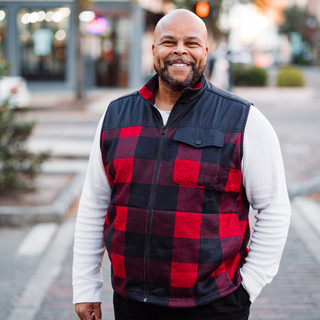
Overcoming workplace in-group bias with universal strategies.
The Setup
You walk into a meeting. You already know who you trust. Who you'll reference. Who gets the benefit of the doubt when they have a bad day. And who has to bring receipts every single time just to get a seat at the table.
That's not a personality thing. That's in-group bias — and it is running your workplace whether you acknowledge it or not.
"People will give more to those they see as part of their group, even when the group is defined by something completely arbitrary." — Tajfel & Turner, Social Identity Theory, 1979 | Cited in over 7,000 academic studies
Henri Tajfel didn't discover this in corporate boardrooms. He discovered it by putting strangers into groups based on nothing — literally coin flips and random assignments — and watching people immediately favor their made-up team. The brain doesn't need a good reason. It just needs a boundary.

Tap a Bias. See What's Really Happening.
These six show up every week in workplaces everywhere. Click each one to see the science — and the real-life flavor.
Affinity Bias
You naturally trust people who remind you of you — same school, same slang, same playlist. In hiring, this means qualified candidates get filtered out before the interview because their LinkedIn felt unfamiliar.
Translation: You hired Chad because he also "bleeds Carolina blue" and not because he was actually the best candidate.
📚 Bertrand & Mullainathan (2004) — résumés with Black-sounding names received 50% fewer callbacks than identical résumés with white-sounding names.
Attribution Bias
When your in-group member is late, it's a circumstance. When the out-group person is late, it's a character flaw. Same behavior, wildly different interpretation.
Brad is 'dealing with a lot right now.' DeShawn is 'not really committed to the role.' Both were late to the 9 a.m. Same 9 a.m.
📚 Rosette et al. (2008), Journal of Applied Psychology — leaders of color received harsher performance attributions for identical outcomes.
Halo / Horn Effect
One impressive moment makes someone your go-to for everything. One mistake puts someone in a box they can't get out of. The halo and the horn are both irrational. Both are powerful.
Kevin killed one presentation in 2019 and has been 'a real team asset' ever since. Nobody knows what he actually does.
📚 Nisbett & Wilson (1977) — seminal halo effect study; widely replicated in performance review contexts.
Confirmation Bias
Your brain actively seeks evidence that confirms what it already thinks — and discards evidence that doesn't. This is why a pre-judged employee can never do anything right in your eyes, no matter what they deliver.
You've already decided. The performance review is just your brain building a legal case for what it already knew.
📚 Wason (1960); extended to workplace contexts in Nickerson (1998), Review of General Psychology.
Proximity Bias
In hybrid and remote workplaces, the people physically near decision-makers get more opportunities, feedback, and visibility. Remote workers — disproportionately caregivers and workers of color — lose out.
If you don't sit near the boss, you might as well be sending emails from Narnia.
📚 Microsoft Work Trend Index (2021) — remote workers were 19% less likely to be considered for promotion than in-office peers.
Similarity Bias
Familiarity feels safe. Safety feels like quality. This is why homogenous teams get built under the illusion of 'culture fit' — when the culture being fit is exclusion dressed up in casual language.
'Culture fit' is often a polite way of saying 'will not make us uncomfortable at the holiday party.'
📚 Rivera (2012), American Sociological Review — elite employers chose candidates based on shared leisure activities, not qualifications.
Why This Hits Differently in Black & Brown Workplaces
Let's not skip over the elephant in the room wearing a polo shirt and a visitor badge.
In-group bias doesn't land the same on everybody. When the dominant in-group is also the majority culture, bias becomes a structural tax — paid primarily by people of color, women, first-gen professionals, and anyone whose accent, name, or lunch got them side-eyed on day one.
Research from Harvard Business Review (2021) found that Black professionals are 35% less likely to receive informal mentorship from senior leadership — not because they're less capable, but because they don't golf, don't fit the "vibe," and don't remind someone of their college roommate. That's not bad luck. That's structural in-group exclusion doing its job — and doing it quietly.
⚠️ The “Colorblind” Trap
“I don't see color” sounds inclusive. It's not. Colorblindness, as a policy, asks marginalized people to make their identity invisible so everyone else can stay comfortable. Neurologically, humans always process race — studies show it happens in under 200 milliseconds (Ito & Urland, 2003). Claiming you don't see it just means you're not examining what your brain does with what it sees.
The Self-Awareness Piece

That gap between “I'm not biased” and “but here are the numbers” — that's where this work lives. Self-awareness isn't a personality trait. It's a practice. And like any practice, it takes repetition, friction, and the occasional uncomfortable conversation.

The Universal Strategies
These work. Not because they're feel-good. Because the research says so — across industries, cultures, and organizational sizes.
 | Structured Decision-Making Use standardized criteria before evaluating anyone. Name your metrics in advance. When bias can't hide behind undefined standards, it loses power. Research: Bohnet (2016), What Works — blind auditions increased female musicians in orchestras by 25–46%. |
 | Perspective-Taking Practice Before evaluating someone, ask: 'How would I interpret this same behavior or result if it came from someone in my in-group?' That pause is doing neurological work. Research: Galinsky & Moskowitz (2000) — perspective-taking reduced implicit bias activation measurably in laboratory settings. |
 | Accountability Anchors Make decisions visible. When people know their choices will be reviewed and named, the brain's justification circuitry kicks in and slows the snap judgment. Research: Castilla (2015), ASQ — companies that shared pay data with managers reduced racial pay gaps by up to 20%. |
 | Mixed Decision Panels Homogenous panels make homogenous decisions. Bring in people who don't share your background — not as tokens, but as structural counterweights to groupthink. Research: Page (2007), The Difference — diverse problem-solving groups outperformed homogenous groups of 'experts' in complex tasks. |
 | Bias Interruption Protocols Name the pattern when you see it. Real-time interruption — 'Let's make sure everyone's been heard' or 'Let's revisit the criteria' — breaks the automatic processing loop. Research: Carnes et al. (2015), Academic Medicine — teams trained in WISELI bias interruption showed measurable hiring equity improvements. |
 | Ongoing Implicit Bias Assessment Self-awareness is not a one-time workshop. Take the IAT (Implicit Association Test). Reassess quarterly. Bias is dynamic — it responds to exposure, stress, and context. Research: Project Implicit, Harvard University — freely available at implicit.harvard.edu. Over 17 million tests completed globally. |
Negotiation — Where Bias Gets Loud
In-group bias doesn't just decide who gets invited to the meeting. It decides who gets believed in the meeting.
Linda Babcock and Sara Laschever's research (Women Don't Ask, 2003, updated 2021) showed that when women negotiate assertively, they're rated as aggressive. When men do the same thing, they're rated as competent. When Black professionals negotiate using the same language as their white peers, they're perceived as demanding. This is bias converting in real time — from snap judgment to lasting label.
Here's the workaround that actually has evidence behind it:
→ The “We” Framing Shift
Research from Columbia Business School (Small et al., 2007) found that negotiators who anchored requests in group benefit — “this helps the whole team deliver” rather than “I need this” — faced dramatically less backlash across race and gender lines. It doesn't eliminate bias. But it forces evaluators to weigh organizational logic against their gut reaction. Sometimes logic wins.
The Neuroplasticity Argument
This is where it gets genuinely hopeful — not the “hang in there” kind of hope, but the neuroscience kind.
The brain is plastic. Bias is learned. Learned things can be unlearned — or more accurately, they can be interrupted by new patterns strong enough to override them. Patricia Devine's groundbreaking prejudice reduction research (1989, replicated 2012) demonstrated that people who were made aware of their biases and given specific strategies showed measurable reduction in automatic bias responses over time. It takes intention. It takes repetition. But it is physiologically possible.
The brain doesn't want to stay biased. It wants efficiency. Your job as a leader is to make the equitable behavior the efficient path.
The Bottom Line
The research doesn't let anybody off the hook. Not the “I'm one of the good ones” leaders. Not the progressive organizations with a DEI statement nobody reads. Not the managers who genuinely believe they treat everyone the same — while the data on their team's promotions, pay, and access tells a completely different story.
In-group bias is not a moral failing. It's a neurological default. The brain builds categories because categories are efficient. The problem is that we let efficiency masquerade as judgment — and then wonder why the same people keep getting left out.
Self-awareness is where this work starts. Not ends — starts. Knowing your bias pattern without a mitigation strategy is just educated helplessness. The six universal strategies above are structured around systems, not sentiments. Structured decision criteria. Accountability anchors. Diverse panels. Real-time interruption. These are behavioral architectures — designs that make the equitable choice the default choice.
For leaders who are from communities that have historically been on the receiving end of in-group exclusion: you are not exempt from perpetuating it. In-group dynamics exist within every community. The work is universal because the wiring is universal.
This is the long game. Show up for it like you mean it.
References
Tajfel, H., & Turner, J. C. (1979). An integrative theory of intergroup conflict. In W. G. Austin & S. Worchel (Eds.), The Social Psychology of Intergroup Relations (pp. 33–47).
Ito, T. A., & Urland, G. R. (2003). Race and gender on the brain. Journal of Personality and Social Psychology, 85(4), 616–626.
Devine, P. G. (1989). Stereotypes and prejudice: Their automatic and controlled components. Journal of Personality and Social Psychology, 56(1), 5–18.
Small, D. A., Gelfand, M., Babcock, L., & Gettman, H. (2007). Who goes to the bargaining table? Journal of Personality and Social Psychology, 93(4), 600–613.
Babcock, L., & Laschever, S. (2003). Women Don't Ask: Negotiation and the Gender Divide. Princeton University Press.
Bertrand, M., & Mullainathan, S. (2004). Are Emily and Greg more employable than Lakisha and Jamal? American Economic Review, 94(4), 991–1013.
Rosette, A. S., Leonardelli, G. J., & Phillips, K. W. (2008). The White standard. Journal of Applied Psychology, 93(4), 758–777.
Rivera, L. A. (2012). Hiring as cultural matching. American Sociological Review, 77(6), 999–1022.
McKinsey & Company. (2023). Women in the Workplace 2023. mckinsey.com
Project Implicit. (2022). Implicit Association Test data summary. implicit.harvard.edu
PwC. (2023). Global Workforce Hopes and Fears Survey 2023. pwc.com
Page, S. E. (2007). The Difference: How the Power of Diversity Creates Better Groups, Firms, Schools, and Societies. Princeton University Press.


Comments